Today, it’s clear that the coaching industry finds itself in a new era of post-pandemic realities. Shaped by tech innovation, shifting corporate culture, and expanding client expectations, the global coaching market is expected to reach nearly $10 billion.
With coaching more accessible than ever a few questions come to mind:
2025 marks a year where the coaching sector not only continues its upward trajectory but does so amidst evolving challenges. Coaches are reimagining how coaching services are delivered, consumed, and integrated.
This white paper examines the forces that are reshaping the coaching landscape. From AI-enhanced coaching platforms to the rise of targeted micro-credentialing, we’ll explore the disruption and reinvention of traditional coaching paradigms. The post-pandemic era has accelerated the adoption of virtual coaching solutions while highlighting the irreplaceable value of human connection in the coaching relationship.
Organizations currently struggle with unprecedented challenges in:
- Talent development
- Talent retention
- Employee well-being
- Leadership development
- Employee engagement
- Team cohesion
- Employee productivity
- Recruitment and hiring
Coaching is now a critical tool for driving sustainable performance in high performance organizations. This research synthesizes insights from industry leaders, market data, and emerging practices to provide a comprehensive view of emerging trends in the coaching industry and what those mean for growth-oriented coaching practitioners and organizations, as well as the clients they serve.
Understanding these trends is essential for remaining competitive and finding new opportunities. This white paper offers a strategic perspective and practical insights for leveraging these trends to create greater impact and value in coaching engagements.
The State of Coaching in 2025: Growth, Income, and Challenges
The coaching industry grew rapidly during the pandemic. As a response to the specific challenges posed by the pandemic, coaching has become much more accessible. But how well is the coaching industry holding up in a world that’s becoming increasingly dominated by technological advancements?
The coaching industry is growing faster than ever. Understanding these changes can help growing coaching practices leverage opportunity.
Market Size & Growth
Since 2020, total annual revenue has increased over 60 percent to $4.564 billion and is expected to reach $9.9 billion by 2034.
The top three regions experiencing the most growth:

For the past decade, more economic development and business expansion in countries like China and India has created a high demand for executive and leadership coaching. As global organizations grapple with unprecedented challenges in talent development, employee well-being, and leadership cultivation, coaching has emerged as a critical tool for driving sustainable performance.
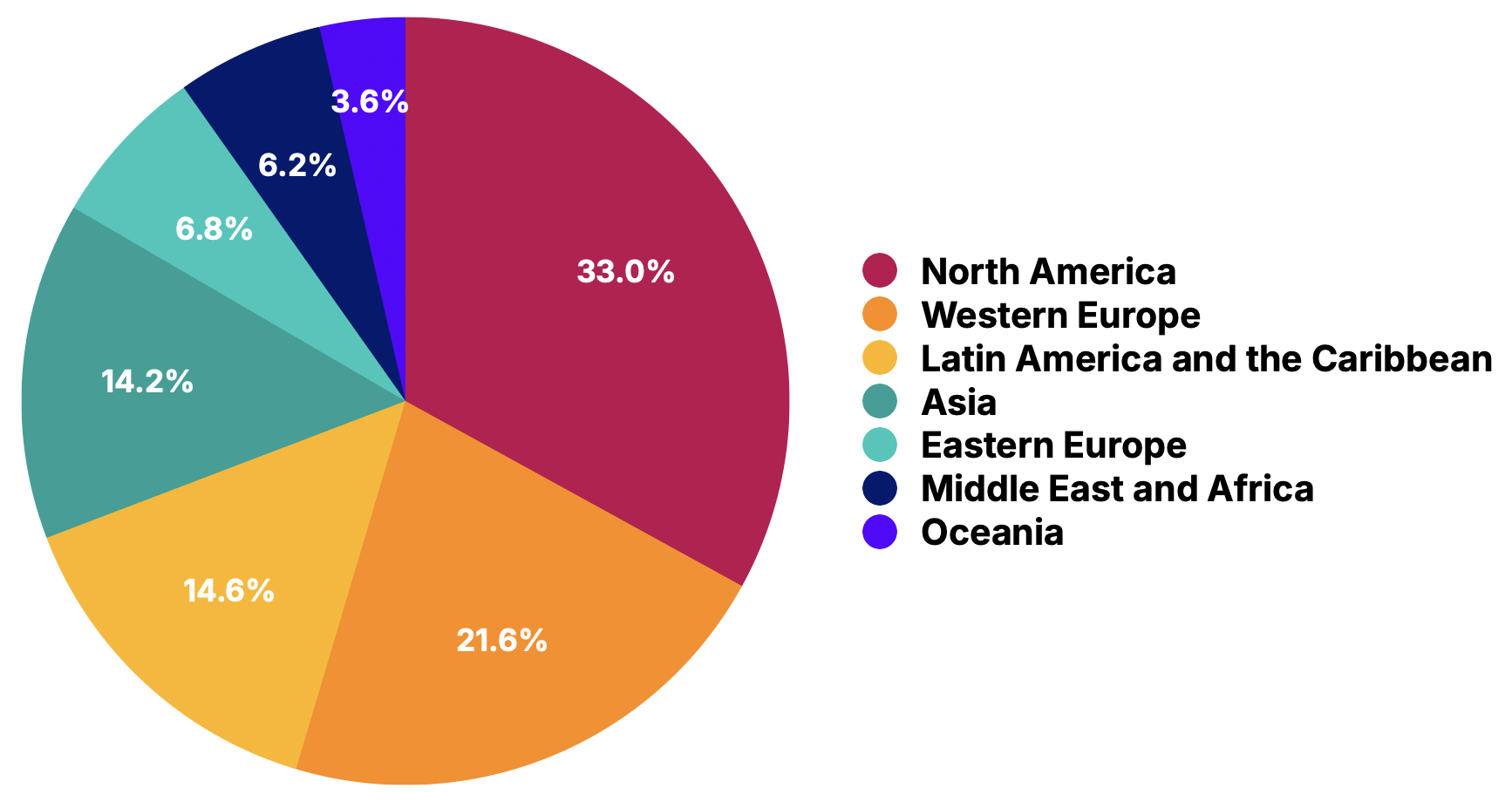
Global Distribution of Coaches
An ICF Global Coaching survey shows that a third of coaches worldwide operate in North America. The global distribution of coaches are as follows:
Income Potential
The income potential for coaches is only limited by their creativity in programs and coaching models, experience, and specialization.
When it comes to diversity in earning potential, coaches can expect to earn incomes that are based on:
Experience
The average annual income for coaches in the U.S. with 15 years of experience is around $160,000, according to the 2020 Sherpa Executive Coaching Survey. Newer or less experienced coaches might start at lower hourly rates, with some earning as low as $18 per hour.
Coaches with significant experience and specialized expertise can charge upwards of $300 per hour.
Income Potential by Specialization
Executive coaches in the U.S. with less than a year’s experience tend to charge around $120/hour, while those with 10+ years of experience can charge $330/hour or more.
In Western Europe, the figure for experienced coaches can go up to $288/hour.
ZipRecruiter reports business coach annual salaries as high as $142,000 and as low as $40,000, with the majority range between $65,000 to $95,000 with top earners making $133,000 annually across the United States.
Life coaches make between $100-$150/hour on average, although this can range widely based on the coach’s niche and reputation.
The health coaching industry is a $7.6 billion industry, with around 128,000 health coaches in the U.S., suggesting a broad range of income potential depending on specialization and demand.
Income Potential by Geographic Region:
In North America, the International Coaching Federation (ICF) reports average annual income from coaching is $62,500. Here’s how the average annual income breaks down for other parts of the world (all values in USD):
- Oceania: $61,100
- Western Europe: $51,100
- Middle East and Africa: $34,900
- Asia: $33,600
- Latin America and the Caribbean: $20,900
- Eastern Europe: $19,100
Income potential can also vary within countries, with higher rates in urban areas or regions with a higher cost of living, like California, Florida, and Texas in the U.S.
Income Potential for Various Pricing Models
- Hourly Rate: $100 to $500+ per hour, depending on experience, expertise, and niche.
- Retainer Agreements: $1,000 to $5,000+ for ongoing support.
- Package Deals: $1,000 to $10,000+
- Success-Based Bonuses: Some coaches receive a percentage of the client’s increased revenue or profits above a set baseline.
- Group Coaching: This involves coaching multiple individuals at a discounted rate per participant, potentially increasing overall income through volume.
- Subscription Models: Offering coaching content via subscription ensures a steady income stream, with models varying from basic to premium offerings.
Coaching Market Challenges for 2025
Market Saturation and Differentiation
With an influx of new practitioners, market saturation is inevitable. This makes it increasingly difficult for new coaches to stand out or for established coaches to maintain their market share.
The increased number of coaches means potential clients have options, making client acquisition more competitive.
Coaches looking to grow their practice in 2025 must rely on specialization in areas like executive coaching, health coaching, and even micro-niche sectors (e.g., neurodivergent coaching, high-performing female executive coaching). Additionally, developing a stronger personal brand while building communities will also help coaches stand out in a highly competitive market.
Quality Assurance and Credibility Issues
There’s a growing concern about the quality and consistency of coaching services, with some calls for regulation. Clients are more discerning, and they are requiring proof of program effectiveness and professional credentials.
With a lack of standardized benchmarking or definitive regulatory oversight, the industry as a whole risks reputation damage by less competent or credentialed practitioners.
Coaches can assure a stellar reputation by investing in continuous professional development, obtaining certifications from reputable bodies like the International Coaching Federation(IFC), and using data-driven assessments to demonstrate impact.
Tech and AI Integration
New opportunities are emerging for coaches using Artificial Intelligence. AI is giving coaches new tools to support their client relationships, marketing, and even consultations. Coaches who fail to capitalize on these new tools might find themselves at a disadvantage.
As clients look for integrated, tech-savvy solutions that offer flexibility, real-time feedback, and personalized experiences, coaches must grow to meet these requirements.
The rise of AI coachbots or digital coaching platforms could disrupt traditional in-person coaching models and provide new avenues for reaching more clients in new ways.
Incorporating digital tools for client management, session scheduling, and progress tracking is crucial. Using AI for preliminary client interactions or data analysis enhances service delivery, and frees coaches from endless calls while still providing their clients valuable insights.
While many might not be ready for cloned coaches answering questions, coaches should also consider hybrid models that combine digital touch points with in-person sessions to cater to varied client preferences.
How Generative AI-assisted Coaching is Impacting the Industry
We are now five years post-pandemic, and life has started to look a bit different. Although some norms are returning, there are some fresh digital opportunities for coaches to create new experiences for their clients.
Generative AI is fundamentally changing the way we communicate, solve problems, and find opportunities. Coaches are now able to do more than automate simple tasks.
According to a 2024 McKinsey and Co. survey, 72 percent of organizational respondents reported AI usage within their respective companies.
How is this wave affecting coaches and their clients?
Clients crave an adaptable, “one of one” experience.
Coaching was never a one-size fits all approach, but AI is taking personalization to new heights. For years, coaches relied on in-person sessions to gather helpful data on their clients. Now, coaches have access to not only more client data but also insights to inform their methodology and decode client progress.
Assessments like Motivation Code, go beyond the traditional “whys” of coaching. Supported by AI, Motivation Code reveals the intrinsic motivation for a client’s desire for transformation as well as the best route to get them to successful outcomes. Motivation Code offers a deeply personal approach, allowing the coach to provide necessary resources and guidance that’s specific for each client.
Clients require additional support outside of traditional office hours.
Access to a coach around the clock is a highly unrealistic expectation, even at a premium price. Coaches are human, with limited time. However, AI-powered coaching assistants are offering opportunities for extended coaching experiences without burning out the coach.
Platforms like CoachVox and Delphi.ai offer 24/7 chatbot support that can answer routine questions, provide encouragement, and help clients stay accountable between sessions. Tools like these are not only trained on the coach’s methodology, they are AI replicas of the coach. These AI chatbots can maintain consistent communication while flagging important issues for the coach’s attention without making clients feel like they are interacting with a bot.
Clients want to see REAL results that are sustainable.
The integration of AI analytics tools is revolutionizing how coaches track and demonstrate client progress. There are platforms that now incorporate AI-driven analytics that can identify patterns in client behavior, measure progress against goals, and provide data-driven insights.
For example, Strive.ai helps coaches monitor client engagement, track habit formation, and generate detailed progress reports that show tangible improvements over time.
Clients desire on-demand access to coaches and helpful resources.
Every client has different motivations, different drives, and different peak hours for performance.
The coaching journey doesn’t happen solely within business hours; it happens when the client is ready to create breakthroughs.
Clients increasingly need access to help and support on their schedule. AI-backed tools and resources can be a powerful tool to fill this gap.
Tools like Coach Hub AI and Wisdom Labs create personalized resource libraries that automatically suggest relevant articles, exercises, and tools based on client progress and goals. Other resource platforms like BetterUp integrate AI-powered micro-learning modules that clients can access anytime. These support live coaching sessions with bite-sized, personalized development content.
Income Sustainability: Coaching Models for Success
2025 marks a turning point in the coaching industry, as heightened market awareness intersects with technological innovation. Sophisticated clients expect tangible returns on their coaching investment. By leveraging emerging technologies and data analytics, coaches can now deliver precisely targeted interventions and track progress with unprecedented accuracy, creating more impactful and accountable coaching experiences.
But tech isn’t the only way coaches can support their practice. New trends allow coaches to merge their communities with continued learning.
Communities increase engagement, whether interacting online or in person. Through community-driven initiatives, coaches can find new opportunities for greater revenue. Complementing these communities with a self-paced, continuous learning environment encourages client retention and offers opportunities for additional service offerings.
There are various business models currently trending in 2025.
Solo Practice vs. Coaching Firm
Coaches looking to grow their business will face different challenges based on the type of practice.
A solo practice is more personal. It offers clients direct interaction with the coach and allows for a fully custom coaching experience. Coaches managing a solo practice have more freedom in how they run their business. On the downside, it’s more difficult to scale a solo practice without burning out.
Coaching firms allow for maximum business growth but it requires more management and operational oversight, which may not be a strong point for some. For those coaches with a strong personal brand, ensuring that the brand is supported through the coaching process performed by a team is a challenge.
The trend in 2025 leans towards hybrid models. This is where solo coaches collaborate with firms or other practitioners in a mutually beneficial partnership, and coaching firms allow for the development of personalized expertise for the coaches on staff.
Trending Revenue Models
Choosing the right business model is dictated by the coaching niche, audience, and the coach’s skill. For example, those with a strong online presence might thrive with membership or freemium models, while corporate connections might favor project-based models.
Subscription Model
Subscription models in coaching offer a recurring revenue stream by giving clients ongoing access to both coaching and additional resources. This model often includes community support. A subscription model model is sustainable because it’s a form of predictable income, which is crucial for planning and growth.
Clients might subscribe for weekly calls, monthly check-ins, or continuous access to a digital library of coaching materials.
To implement, a coach would offer tiered pricing that includes different levels of access to content or personal interaction. Using platforms like Patreon or Memberful to manage subscriptions makes this process easier.
Freemium Model
The freemium model attracts clients by offering entry-level services for free. This could include access to introductory webinars, free mini-courses, or a limited number of coaching sessions. Often these models will have some exclusive content at a lower price point, with a later upsell into more exclusive services.
This model builds trust by providing value upfront. A freemium model gives potential clients the ability to try a coach’s unique offering before they invest. Prospective clients are then converted into paying customers looking for greater outcomes.
Project-Based Model
Project-based coaching is perfect for clients with specific goals like leadership development, team integration, or strategic planning with well-defined outcomes. This model suits clients looking for short-term, metric-focused results. Coaches work on a project-by-project basis where they set clear goals, timelines, and deliverables.
This model aligns well with corporate budgeting cycles and contracts requiring a committed outcome. A project-based model allows for targeted interventions and can lead to high-impact results within a defined period.
Hybrid Delivery Models
Hybrid models blend traditional in-person coaching with digital methods. Coaches can cater to a variety of client needs and learning preferences tailored to individual motivations and goals.
Coaches looking for a hybrid model might use tools like Zoom for live sessions, VR platforms like Oculus for immersive experiences, and coaching apps for micro-coaching.
- VR/AR: These technologies simulate environments or scenarios for coaching. By using tools like Oculus, coaches can create immersive experiences for their clients.
- Micro-coaching: By offering short, targeted sessions delivered via text, video, or mobile app, coaches can support busy clients who need immediate support on-the-go.
- Blended Learning: Combining digital resources with live Zoom sessions, this model supports many different learning styles. This makes coaching more accessible and personalized.
Corporate Coaching Programs
More companies see the value of coaching for executives and managers alike. As such, there is a trend towards embedding coaching programs within organizations. Some are bringing outside experts into organizations, embedding coaching practice as an integral part of organizational health. Yet other organizations are establishing internal on-staff coaches. These coaches have a variety of expertise and focus, including:
- Executive coaches focus on high-level leadership development, helping executives enhance their decision-making, communication skills, and overall effectiveness.
- Leadership coaches target mid-level managers and aspiring leaders, concentrating on leadership skills, team dynamics, and strategic thinking.
- Career coaches assist employees with career development, helping them navigate transitions, identify opportunities, and achieve career goals.
- Team coaches facilitate team dynamics and improve collaboration, often working with groups to enhance cohesion, communication, and productivity.
- Performance coaches work with individuals to improve specific skills or performance metrics, helping them achieve particular personal or professional goals.
- Wellness coaches focus on employee well-being, addressing stress management, work-life balance, and overall health to promote a healthier workplace.
- Change management coaches support organizations navigating transitions, providing guidance on adapting to changes in processes, culture, or strategic direction.
- Sales coaches specialize in enhancing sales skills, strategies, and performance, often providing training and support for sales teams.
- Organizational development coaches assist in aligning coaching efforts with broader organizational goals, focusing on systemic change and cultural transformation.
Profitable Coaching Niche Opportunities for 2025
With niche specialization, coaches can differentiate themselves in crowded coaching markets. There are some niches showing immense potential for growth and opportunity.
Digital wellness coaching
Many people experience negative impacts on their mental or physical health due to excessive screen time, social media usage, or unhealthy digital habits. These impacts can include feeling anxious, stressed, sleep disturbances, or neglecting real-life interactions.
A digital wellness coach helps clients manage and balance their lives with respect to technology. This specialized coach helps clients:
- Learn how to incorporate technology to maximize wellness
- Manage screen time and overconsumption
- Mitigate the negative impacts of technology on mental health
- Balance work-related anxiety
According to the Digital Wellness Institute, their custom interventions and education show a 22 percent decrease in burnout and a 34 percent decrease in workplace anxiety.
Neurodivergent coaching
Due to increased awareness and improved diagnostic testing, more adults have received diagnoses for ADHD and autism. Although society has increased their support for people who live with these disorders, there are still challenges for the neurodivergent when it comes to navigating everyday life.
Neurodivergent coaching empowers clients living with ADHD and autism. This coaching niche helps clients develop strategies that leverage their strengths while taking into account how their brain naturally functions and their individual stressors.
During coaching, clients receive tailored systems for organization, managing time effectively, and aligning their executive functions with their natural tendencies.
Sustainability coaching
Being passionate about the environment is nothing new, but in recent years there has been a shift in the values of people and businesses. There are people who want to do more to decrease their carbon footprint.
Sustainability coaches take an inventory of their client’s lifestyle and help them integrate sustainable practices into their personal and professional lives.
Ethics coaching
Morals and ethics are hot topics within professional organizations. An ethics coach helps their clients properly address ethical dilemmas in the workplace while minimizing any associated risks.
Coaches usually work with employees who are whistleblowers and upper management who need help dealing with specific ethical crises.
Measuring Impact & Success: Why Assessments are Becoming the Foundation for Coaching Practice Growth
The coaching industry is witnessing an unprecedented expansion in both the number of practitioners and demand for services. Clients now seek tangible proof of coaching’s efficacy, requiring coaches to adopt reliable metrics for validation.
A coaching assessment, which offers a structured evaluation of a client’s strengths, weaknesses, and intrinsic motivations establishes a clear roadmap for coaching interventions.
In 2025, we see a rise in the strategic implementation of quality coaching assessments. Here’s why.
Assessments and Client Acquisition
Customer/client acquisition costs have increased 60 percent over the last five years. This increased acquisition cost means coaches face losing $29 for every client they book through marketing efforts like running ads.
Assessments present a cost-effective solution for attracting new clients. For instance, Motivation Code’s Lite assessment report provides prospective clients a high-level overview of the motivation that will drive success for just $19.
Integrating Motivation Code’s Lite report with a free discovery session builds trust and opens avenues for further engagement.
Using Assessments for Benchmarking and Goal Setting
The best way to close the sale with a new coaching prospect is to show proof that your methodology works. Testimonials and reviews are great, but nothing competes with a personal experience designed to showcase your commitment to outcomes.
When you use an assessment in your coaching practice, it gives your clients a starting point to track their progress and insights on the successes ahead. Additionally, when you use Motivation Code, your clients begin their coaching journey with a clear picture of who they are at their core. This helps with aligning their goals with their deepest motivations for achieving those goals.
These specialized insights create more impactful sessions and position coaches as an invaluable resource for client success.
Assessments for Long-Term Success in Coaching Practices
Certification and training are foundational for the coaching industry and they are no longer a “nice to have” asset. More prospective coaching clients require proof of prior track records. It’s not enough to simply offer an assessment to your clients, you need to become a certified expert on that assessment. It positions you as a reliable resource for your clients.
But that’s not all.
Becoming certified in an assessment tool validates a coach’s skills and significantly enhances their market credibility. Motivation Code offers coach certifications that offer:
- Listing in the Certified Motivation Code Coach Directory, increasing visibility and opportunity for new leads.
- Access to MCode Impact Session clients through the Motivation Code referral system.
- Opportunities to earn up to $7,500 by conducting Team Workshops as an Executive Certified Coach.
As businesses and individuals continue to demand data-backed solutions, assessments serve as an important tool in showing potential ROI on coaching services. Coaches must give clients an unmatched coaching experience as well as position themselves as unparalleled experts in their field. Assessments are key for doing so and thus future growth.
Coaches Who Adapt to Market Trends Will Win
The future of coaching lies in the ability to adapt, innovate, and measure success with precision. Coaches who welcome these trends by leveraging technology and venturing into specialized niches, will thrive in 2025.
At Coach Factory, we’re committed to supporting coaches through free resources, community, training, and more. Need a specific tool or resource for your practice? Request a coaching resource here.
We believe in coaching and we love talking shop with coaches at every stage of their entrepreneurial journey — so if you have a question or a partnership opportunity, get in touch!