

The coaching industry is becoming more competitive every day, making it crucial to develop unique and compelling coaching packages that set you apart from the competition. This article will guide you through the process of creating an outstanding coaching package that caters to your clients’ needs, showcases your unique value, and differentiates your coaching practice in a crowded market.
Why should you sell coaching packages?
In a competitive market, you must differentiate your coaching services from the competition. And you can’t differentiate yourself on the quality of your coaching or other vague attributes like integrity and support.
To successfully differentiate yourself as a coach, consider alternative approaches that elevate your brand and create a lasting impression. Instead of relying solely on providing “better” coaching, focus on creating genuine value for your clients by offering something they won’t find elsewhere.
That’s where coaching packages come in.
What’s the difference in coaching packages versus regular coaching?
Coaching packages differ from regular coaching by offering clients a more comprehensive, structured, and value-driven experience. Regular coaching typically consists of individual sessions booked on an ad-hoc basis. Coaching packages, on the other hand, provide a more comprehensive solution that caters to clients’ needs and objectives over an extended period.
Key factors that distinguish coaching packages from ad-hoc coaching:
- Structure and duration: While regular coaching tends to be more flexible, with clients booking single sessions as needed, coaching packages often include a predetermined number of sessions or are designed to last for a specified duration, like a three-month program. This structure provides a clear roadmap for clients and coaches to follow, ensuring that the coaching process is more focused and results-driven.
- Bundled resources: Coaching packages typically come with additional resources that supplement your coaching sessions and enrich the coaching experience. These may include access to exclusive content, templates, downloadable materials, or a group communication platform to achieve their goals.
- Commitment and investment: Coaching packages require clients to commit to an extended, higher-level engagement with premium pricing that is beyond that of a single coaching session. This commitment leads to deeper, more meaningful coaching relationships, as clients are more invested in their personal growth and development. Working with fewer clients at higher investment levels allows you to dedicate more time to each client and better understand and adapt to their needs.
- Customization and personalization: Coaching packages provide the ability to design and tailor your offering to meet the unique needs and preferences of your clients. By carefully curating sessions and resources, you can create a package that addresses specific goals, challenges, and desired outcomes. This level of customization ensures that your clients receive a highly personalized coaching experience that aligns with their objectives.
- Value perception: Coaching packages are often perceived as more valuable than regular coaching sessions due to their comprehensive nature and the inclusion of additional resources. Clients who invest in a coaching package expect a higher level of support and a more personal and impactful coaching experience. This perception of value can make coaching packages more appealing and increase client satisfaction.
When you offer coaching packages instead of selling one-off coaching sessions, you’ll distinguish your practice from other coaches by offering a structured, value-driven, and personalized approach that caters to clients’ needs and goals over an extended period.
4 Steps to Creating a Compelling Coaching Package
Creating a coaching package may seem daunting, but if you follow these four steps, you can build a compelling offer that addresses your clients’ needs and sets you apart.
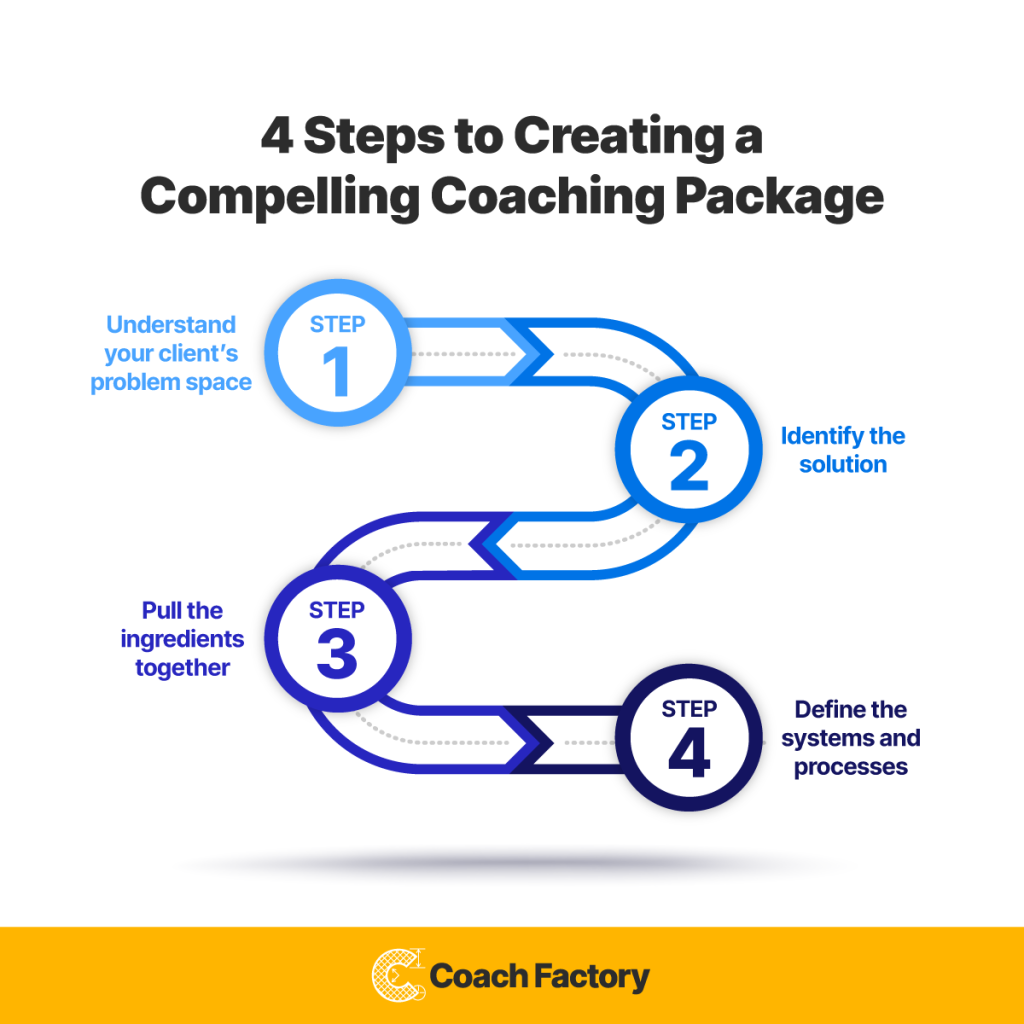
- Understand your client’s problem space
Resist the temptation to start with what you want to teach your clients. Instead, start by identifying the problem your coaching package will solve. Determine the key pain points of your potential clients, whether it’s overcoming a fear of public speaking or getting out of debt. This step lays the foundation for a successful package. - Identify the solution
With a clear understanding of the problems your clients are trying to solve, identify the resources and offerings needed to help them solve it. Consider including access to a community, templates, or exclusive tools. Focus on quality resources over quantity, and ensure they’re relevant and helpful. If you have existing resources from individual coaching sessions, consider bundling them into your package. - Pull the ingredients together
Next, it’s time to gather the pieces of your offering together and outline the details of each package. Begin by determining the duration, what you’ll include, how you’ll deliver it, and what you’ll charge for your coaching package. Be prepared for your coaching package to evolve as you learn what works and what doesn’t through iterations and improvements. - Define the systems and processes
Finally, outline the specific steps you’ll take to guide the client through the entire process, start to finish. As your coaching package takes shape, consider how you might automate some of the steps, for example, new client onboarding. Automating your processes not only saves time and reduces administrative tasks, but also allows for a more consistent and streamlined client experience. Plus, it increases the client’s perception of the value you bring, while enabling you to focus on delivering more impactful coaching sessions.
While you’re at it, don’t limit yourself to creating just a single package. Rather, think about how you might offer several packages at different price points and durations to accommodate various client needs and budgets. One way to look at this is to consider your offering as a “product ladder.”
Defining Your Product Ladder
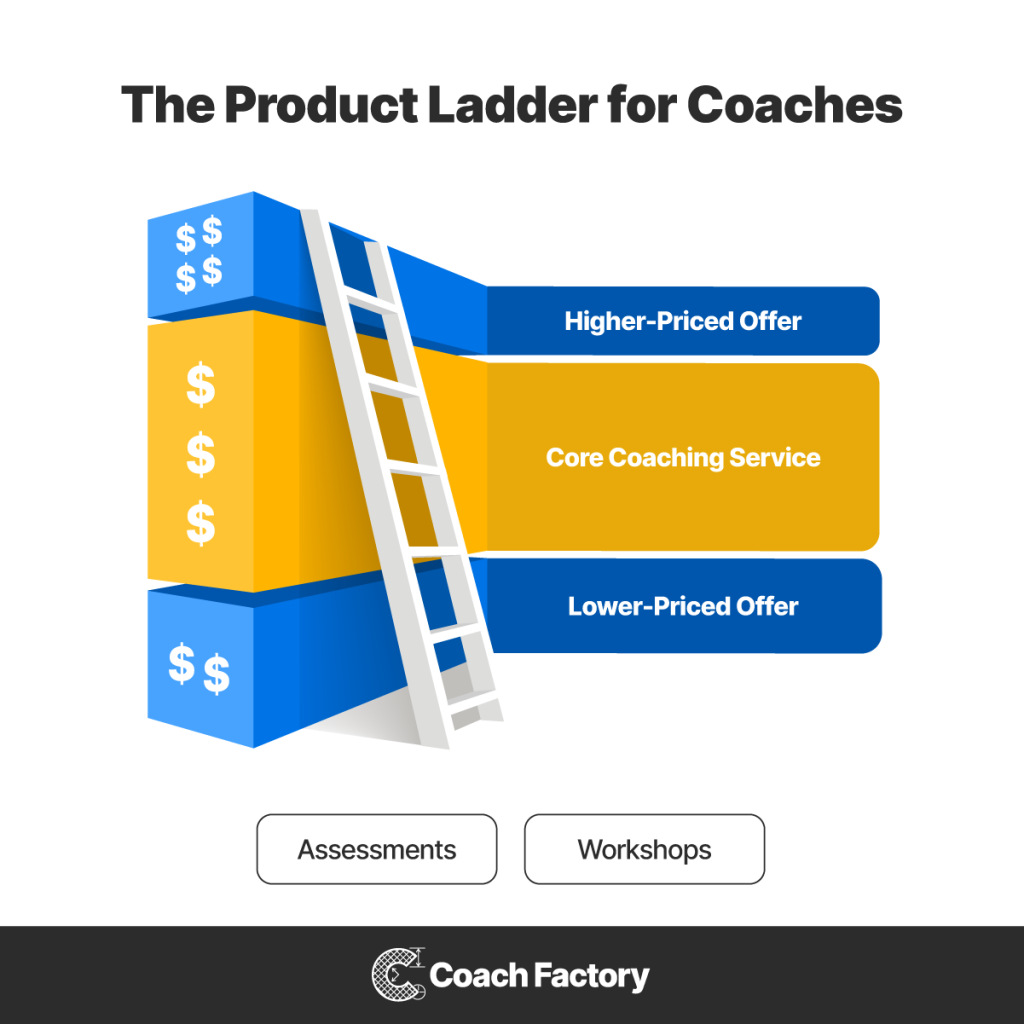
A product ladder is a strategic approach to offering a range of services at different price points, catering to varying client needs and budgets. Long-time coach, Chris Lema, suggests using product ladders to identify what people want and then develop targeted coaching packages. To create your product ladder:
- Start with your core coaching service: This is your primary offering, typically one-on-one coaching sessions. Focus on delivering exceptional value and results with this service, as it will serve as the foundation for your entire product ladder.
- Add a lower-priced offering: Create a more accessible, entry-level product, such as a self-guided online course, an ebook, or a series of pre-recorded webinars. This allows potential clients to experience your coaching style and expertise without committing to a higher-priced service.
- Develop a higher-priced offering: Offer an exclusive, high-touch coaching experience, like a group coaching program, an intensive retreat, or a mastermind group. These premium offerings should provide clients with a more personalized and immersive coaching experience, as well as access to additional resources and support.
- Include additional products or services: Consider adding complementary offerings, such as assessments, workshops, or speaking engagements. These can serve as standalone products or as enhancements to your existing coaching packages, providing clients with more comprehensive support and increasing your revenue streams.
Once you have a solid idea of what services you’ll include at each tier of your coaching packages, the next question you’ll want to consider is, “How much do I charge for my coaching packages?”
How to Price Your Coaching Packages
Setting the right price for your coaching packages not only communicates the value of your services but also ensures that you attract your ideal clients. Follow these guidelines to determine the appropriate pricing for your coaching package:
Consider your target audience and niche
When setting your coaching package’s price, it’s essential to keep your target audience and coaching niche in mind. Consider the product ladder you created earlier. Different niches and client demographics will have varying budgets and expectations. Understand the financial capacities and willingness to invest of your target clients to ensure that your pricing is in line with their expectations.
Calculate your costs and desired profit margin
To ensure that your coaching practice is financially viable, consider your expenses and desired profit margin when pricing your package. Start by calculating your costs, such as marketing expenses, software subscriptions, and any additional resources you provide. Then, determine your desired profit margin, taking into account the time and effort you invest in coaching sessions and the value of your expertise.
Research the competition
Before setting your coaching package’s price, it’s helpful to research the competition within your niche. Analyze the pricing structures of other coaches offering similar services to gauge the market rate. This information helps you establish a competitive pricing strategy that reflects the value of your services while remaining attractive to your target clients.
Offer tiered pricing or payment plans
To accommodate clients with different budgets and needs, consider offering tiered pricing or payment plans for your coaching package. Tiered pricing allows clients to choose between different levels of service, while payment plans make it easier for clients to commit to your coaching program by breaking down the total cost into more manageable installments.
Test and adjust
Remember that pricing is an iterative process. Be prepared to test and adjust your pricing strategy based on client feedback and market conditions. As you gain more experience and refine your coaching offerings, you may need to revisit your pricing structure to ensure it remains competitive and accurately reflects the value of your services.
Your coaching packages will differ from those offered by other coaches in terms of what’s included, the duration, and your expertise or experience as a coach. So, only you can decide exactly how much you should charge for your coaching package. Still, with these guidelines, you’ll be able to establish a pricing strategy that supports the growth and success of your coaching practice.
Promoting and Selling Your Coaching Package
Clearly communicate the value of each package: Highlight the specific benefits, features, and outcomes associated with each coaching package. This will help clients understand the value they’ll receive and make it easier for them to choose the right package. Use clear language, visuals, and examples to effectively convey the advantages of each package.
Offer a discovery call: Use a free or low-cost discovery call to connect with potential clients, understand their needs, and recommend the most suitable coaching package. Discovery calls allow you to showcase your expertise, listen to your clients’ concerns, and establish trust before they commit to a coaching package.
Encourage long-term commitments: Offer incentives, such as discounted rates or bonus resources, for clients who commit to a long-term coaching relationship. Long-term commitments not only provide a more stable income for your coaching business but also allow for deeper client relationships and more significant results.
Use a high-converting sales page: Optimize your coaching package sales page to effectively communicate the value of your services and encourage potential clients to take action. Incorporate persuasive copywriting, testimonials, and clear calls-to-action to guide visitors through the decision-making process.
Implement a follow-up strategy: Develop a system for following up with potential clients who have expressed interest in your coaching packages. This may include personalized email campaigns, retargeting ads, or phone calls. A well-planned follow-up strategy can help convert interested prospects into paying clients.
Leverage partnerships and referrals: Collaborate with other professionals, such as therapists, consultants, or industry influencers, to refer clients to your coaching services. Establish a referral program that rewards existing clients for referring new clients to your business. This can significantly expand your client base and increase your credibility in the industry.
Boost Your Coaching Practice and Make a Greater Impact through Packages
By developing your product ladder, then using it to create multiple coaching packages, you’ll be better equipped to stand out from the crowd and grow a successful coaching practice.
Remember to focus on delivering exceptional client experiences, showcasing your unique value, and continuously refining your offerings to meet your clients’ evolving needs. Embrace an adaptive and client-centric approach to ensure your coaching business thrives in a competitive market.


