
When you first started your coaching blog, monetizing may have not been a priority for you. For most, blogs are a way to share your perspective on trending industry issues, inform the public about your methodologies, and build your personal brand.
Over time, you’ve probably noticed an uptick in your visitors. At this point, you’ll want to start converting them from just visitors to a booked client.
Let’s discuss a few ways to capture the interest of those who visit your blog.
Center Your Blog Posts Around These 3 Themes
Your blog is the one of the few places on the internet where you have complete control over what you post. Your audience is out there searching for solutions to their problems and your coaching blog should have the answers and guidance they need. This is why it’s important to have content pillars to make it easier for you to create and share your valuable information.
Here are three content pillars to use when writing your posts to ensure they are engaging and impactful.
1. Present the problem; sell the solution.
Every effective coaching blog should have helpful and informative content. This content is centered around the most common challenges or issues that their potential clients may face. But addressing their needs is only half the job, you also need to provide practical solutions.
For example, if you’re discussing an issue that clients face in career advancement, avoid harping on the issue itself. Instead, highlight aspects of your coaching methods or speak about specific workshops you hold to help clients. The blog posts are intended to be helpful but there’s still room for a subtle pitch of your services.
2. Offer your perspective on industry issues.
As a coach, your unique perspective is your trademark. When you write about current industry trends weave in your personal thoughts and methods for analyzing the information. Your goal is to help your audience understand what is happening in the industry while showing how you navigate the changes. This not only sets you apart from other coaches but also invites the audience to consider new ways of thinking and problem-solving.
3. Tell your client’s success stories.
Sharing client testimonials and success stories are a powerful way to connect with your audience and show the real impact of your coaching. This content pillar would be your opportunity to walk your audience through your client’s journey. Show how your coaching transformed the client and highlight your role in their success to give potential clients a glimpse of what’s possible.
In your posts, get personal. Talk about where your clients started, what they faced along the way, and how they felt during a life changing moment. Don’t just tell their stories—show them by including videos or photos that bring these transformations to life.
Use Calls-to-Action (CTA) to Improve Booking Conversions
A call-to-action, or CTA, is a button or link that prompts your audience to take a specific action. It’s one of the most important elements of your blog. Whether it’s subscribing to your newsletter, booking a consultation, or just reading another related article, an effective CTA will significantly increase reader engagement and conversion rates.
Here’s how to use CTAs throughout your blog site:
Strategically position CTAs on your homepage.
Start with a strong CTA on your blog’s homepage. To achieve this, the first thing a visitor should see is a direct link to your booking page. The CTA should encourage visitors to engage with your services by saying something like “start your journey here” or “book a transformative information session”. This is your chance to make a strong first impression.
Make all CTAs clear and visible.
Implement a sticky top and bottom bar that remains visible as the reader scrolls down the page. Use a simple question like “”Are you ready to transform your life today?” It helps to keep your visitor’s attention while they browse your blog. At any time they can click the CTA to be directed to your products and services.
Incorporate CTAs within your blog posts.
Within the body of your blog posts, include CTAs that are seamlessly integrated into the content. These should provide a natural next step for the reader, such as signing up for a service or viewing a product related to the topic discussed.
Here is an example of an in-blog CTA:
Feeling Overwhelmed by Stress?
You don’t have to manage it alone. If you’re struggling to keep stress at bay and find balance, our personalized stress management coaching can help. By understanding your unique stressors, we develop tailored strategies to help you live a more balanced and fulfilling life.
👉 Sign Up for a Free Stress Assessment SessionThis 20-minute session will introduce you to practical techniques and tools tailored to your lifestyle, helping you take the first step towards a less stressed and more enjoyable life.
You can also use the sidebar for additional CTAs. This area is perfect for promoting multiple products or services without interrupting the flow of the main content.
Tool and Resources for Improving Blog Conversion Rate
Implementing these strategies can be time consuming and confusing for some. If you find that you aren’t very tech-savvy or you need a simpler way to improve your conversions, here are a few tools to use to help you.
1. Hello Bar
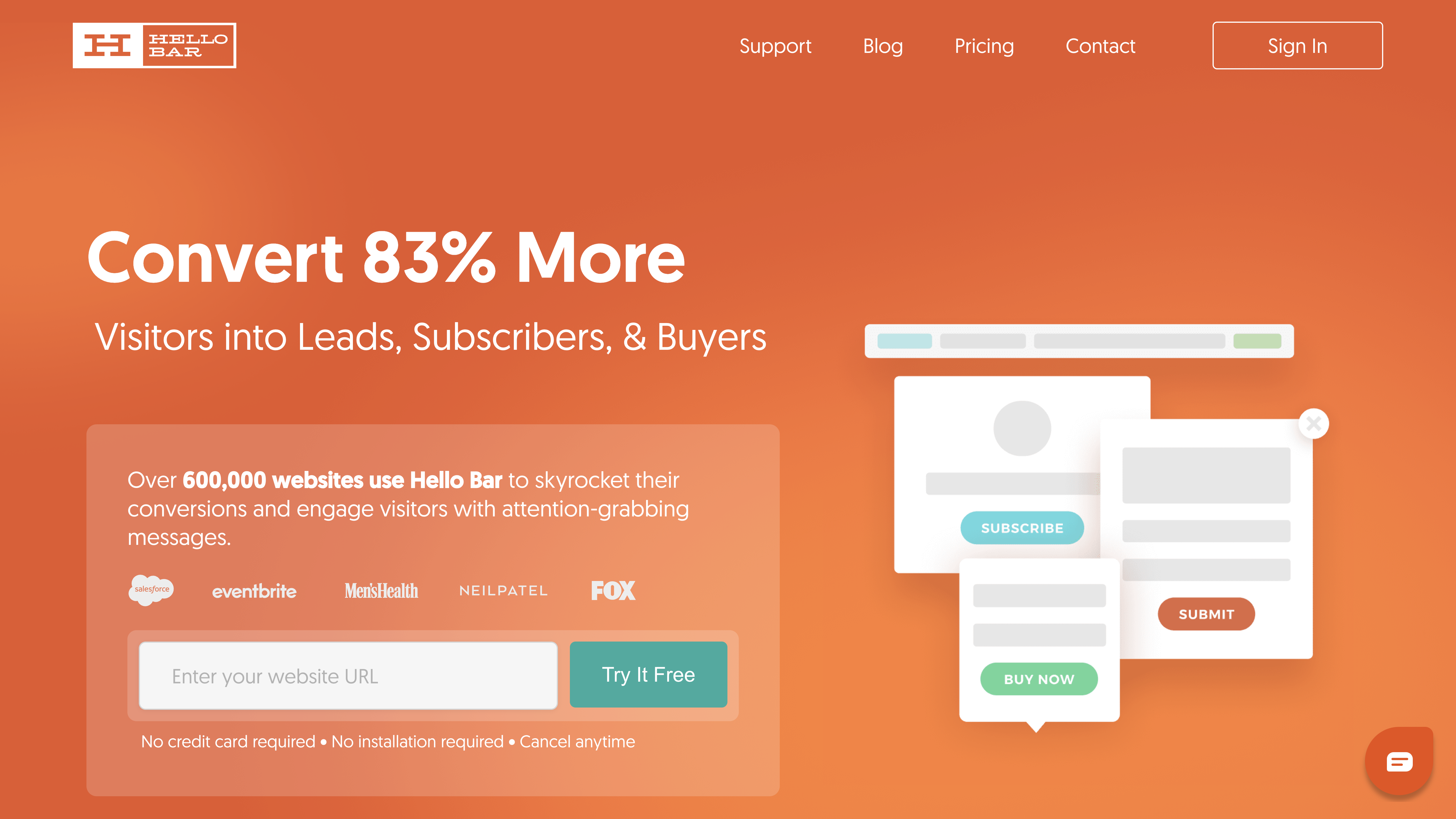
Hello Bar allows you to add attention-grabbing headers or pop-ups to your site. Use them to promote a special offer, encourage newsletter sign-ups, or guiding visitors toward your latest content. The tool is useful for creating customized CTAs that are specifically tailored to your audience which helps to increase conversions.
Over 600,000 websites utilize HelloBar to convert 83% more visitors into leads, subscribers, and buyers. The platform offers a variety of pop-up types, including header and footer bars, modals, sliders, alerts, and full-page takeovers, each designed to capture visitors’ attention at the right moment. You can customize every element to match your website’s style, including color, size, and layout, using a visual editor. This ensures that the messages not only stand out but also integrate seamlessly with the website’s design.
One of the standout features of Hello Bar is its targeting and optimization capabilities. You can create custom messages based on the visitor’s location, their device, time spent on your site, and even for specific campaigns, ensuring the right audience sees the right message.
And Hello Bar provides detailed analytics and A/B testing to track and enhance campaign performance, so you can refine your strategies for better results. Hello Bar is a comprehensive solution to enhance visitor engagement and drive conversions.
2. Optimizely

Optimizely provides A/B testing capabilities that allow you to experiment with different versions of your web pages to see which elements perform best. It offers everything from content creation and campaign planning to advanced experimentation and personalization. You can use it to test different strategies, gather insights, and refine your approach based on realtime data, which can help you create more engaging and effective content for your clients.
Optimizely gives you tools for managing your content and digital assets, in addition to integrated AI capabilities, so you can streamline your publishing processes and focus more on what you do best—coaching.
The platform’s integration with various apps and tools also means you can customize it to fit your specific needs. Whether you want to improve your website’s user experience, boost client engagement, or run targeted campaigns, Optimizely provides the flexibility and insights to make it happen. It’s like having a digital marketing assistant that helps you stay ahead of the curve and continuously improve your services.
3. Hotjar

Hotjar goes beyond traditional analytics to give you a visual understanding of your visitors’ behaviors. With features like heatmaps, visitor session recordings, feedback surveys, and conversion funnels, you’re able to visually see how users interact with your site. This information helps you identify usability issues, improve user experience, and ultimately increase the effectiveness of your CTAs.
With heatmaps, you can visually understand where visitors click, move, and scroll, allowing you to optimize your site’s layout and content to better meet their needs. This helps in creating a more engaging and user-friendly experience, which can lead to higher conversion rates and client satisfaction.
Session recordings allow you to watch real user sessions, giving you a clear view of any frustrations or obstacles visitors encounter. This can be incredibly useful for identifying and resolving issues that might be preventing potential clients from signing up or engaging with your content. Additionally, Hotjar’s feedback and survey tools enable you to gather direct input from your visitors, providing you with the data you need to create more helpful content. These tools help you make informed decisions based on actual user behavior and feedback, so you can tailor your offerings and communications to better serve your clients’ needs.
Integrating Hotjar with other tools you already use, like Google Analytics and Slack, makes it easy to pull those insights into your existing workflows. With Hotjar, you can continually refine your content strategy, improve your visitors’ experience, and ultimately foster stronger connections with your clients.
Your Blog Is More Than Just a Link on the Internet
Your coaching blog is your platform and you should be able to use it strategically to increase bookings and sell your products. The combination of creating relevant content, adding effective CTAs, and using the best tools will transform your blog into an asset.
Aside from filling your books with new clients, your blog will also begin to serve as a passive income stream to support your coaching practice. In the end, you, your clients, and your potential clients will benefit from your coaching blog.